
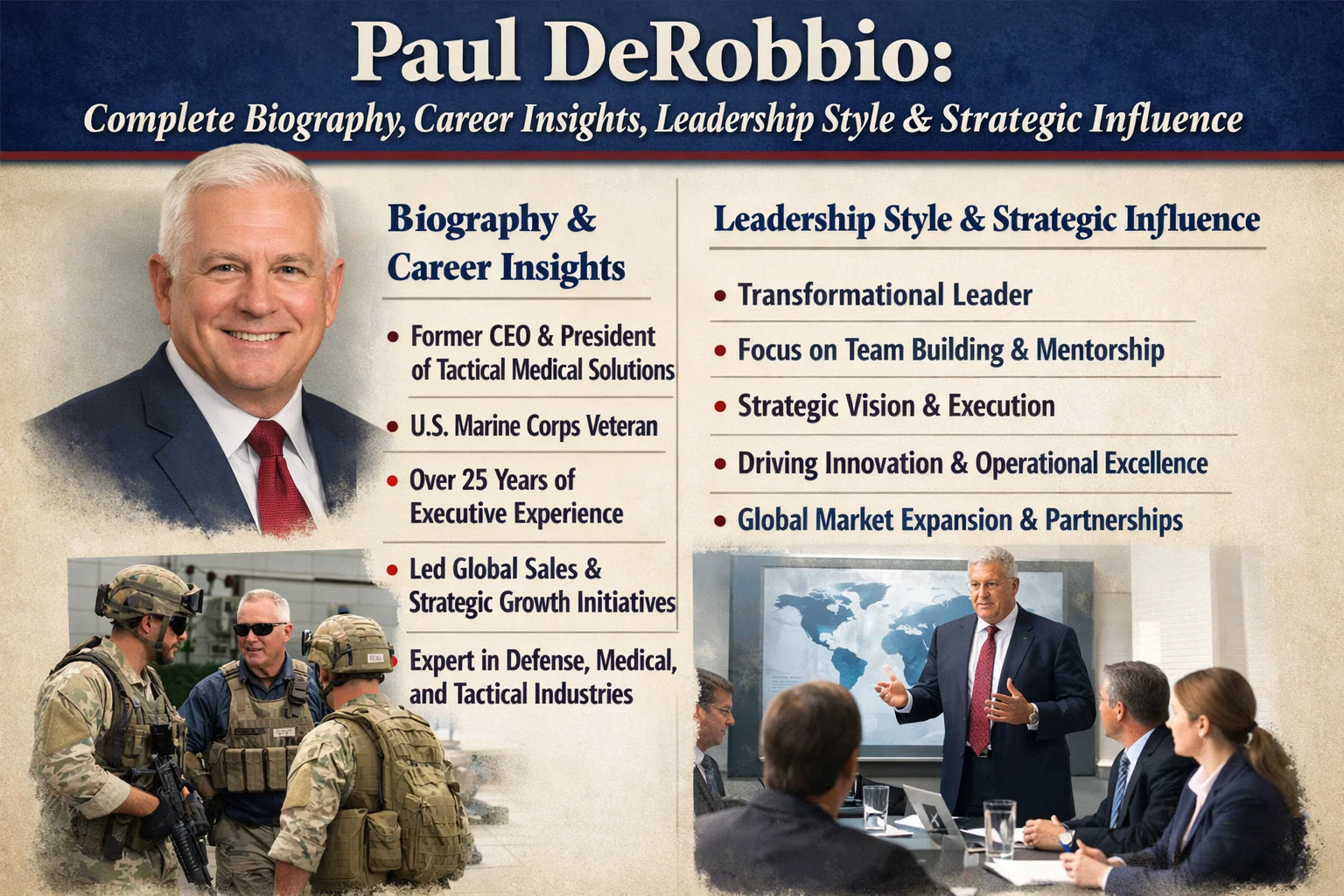
In the evolving landscape of modern leadership and professional impact, few names spark as much curiosity and sustained interest as paul derobbio. Whether discussed in business circles, entrepreneurial communities, or professional development conversations, his profile represents a compelling blend of strategy, resilience, and long-term value creation. This in-depth authority guide explores the background, career trajectory, philosophy, influence, and broader significance of paul derobbio, positioning this article as the most comprehensive resource available.
Early Life and Foundational Influences
The early foundations behind paul derobbio reveal the classic blueprint of disciplined growth combined with intellectual curiosity. Influences during formative years often shape later professional philosophies, and in this case, a strong emphasis on accountability, structured thinking, and long-range planning became defining traits.
Rather than chasing rapid visibility, the early approach centered on skill stacking and deliberate capability building. Exposure to competitive environments, problem-solving frameworks, and strategic decision-making patterns created the mental architecture that would later support more complex professional ventures and leadership responsibilities.
Educational Background and Skill Formation
Education played a catalytic role in shaping analytical precision and operational discipline. Structured learning environments helped refine critical thinking, financial literacy, organizational awareness, and communication fluency—core competencies that underpin sustainable professional performance.
Beyond formal education, continuous self-directed learning further differentiated paul derobbio. Industry research, mentorship relationships, and ongoing adaptation to evolving markets reinforced a growth mindset, allowing both tactical and strategic skills to compound over time rather than stagnate.
Career Beginnings and Early Professional Momentum
Early career stages often reveal how individuals respond to pressure, ambiguity, and limited resources. In these foundational years, paul derobbio demonstrated an ability to convert constrained environments into opportunities for experimentation and refinement.
Instead of prioritizing short-term recognition, the focus remained on mastering systems, understanding stakeholder expectations, and building credibility through measurable outcomes. This methodical approach created momentum that later supported more visible leadership roles and broader influence.
Strategic Decision-Making Philosophy
One distinguishing characteristic associated with paul derobbio is disciplined decision architecture. Strategic decisions were rarely reactive; instead, they were filtered through risk evaluation models, opportunity cost assessments, and scenario planning.
This philosophy reflects a principle often cited in high-performance leadership circles: “Strong decisions are made long before the moment of pressure arrives.” By embedding preparation into process, volatility becomes manageable rather than destabilizing.
Leadership Style and Organizational Influence
Leadership style influences both internal culture and external reputation. Observers often note that paul derobbio favors structured accountability combined with autonomy, enabling teams to operate with clarity while retaining creative latitude.
This balanced model encourages performance metrics without suffocating innovation. Clear expectations reduce friction, while empowerment increases engagement—two dynamics that, when combined, elevate operational efficiency and long-term stability.
Professional Reputation and Public Perception
Professional reputation is rarely built on a single milestone. It evolves through consistency, reliability, and measurable contributions over time. In professional networks, paul derobbio is frequently associated with strategic steadiness rather than impulsive ambition.
Public perception tends to mirror that consistency. Colleagues and industry observers often describe a pragmatic orientation, prioritizing execution over theatrics and long-term outcomes over short-term applause.
Core Values and Ethical Framework
Values operate as invisible infrastructure beneath visible success. A strong ethical framework guides negotiation styles, partnership decisions, and stakeholder engagement patterns.
In discussions surrounding paul derobbio, integrity and long-range responsibility often emerge as defining themes. Rather than optimizing solely for immediate gain, decisions appear aligned with sustainability, risk containment, and principled conduct.
Key Career Milestones
Significant milestones illustrate professional trajectory and cumulative expertise. Each advancement typically signals not only achievement but also expanded scope of responsibility.
Over time, paul derobbio moved from execution-focused roles into positions requiring strategic oversight, resource allocation decisions, and performance optimization at broader scale. These milestones demonstrate capacity growth rather than simple title progression.
Business Philosophy and Operational Approach
Business philosophy determines how opportunities are evaluated and capital is deployed. The operational lens often emphasizes measured growth rather than speculative expansion.
Within this framework, paul derobbio has been associated with disciplined resource management, careful market assessment, and performance benchmarks grounded in realistic projections rather than hype-driven expectations.
Industry Context and Market Positioning
Understanding industry context is essential for evaluating impact. Market cycles, regulatory landscapes, and competitive intensity shape strategic choices and influence risk tolerance.
Positioning within this environment reflects adaptability. Rather than resisting change, paul derobbio appears to interpret shifts as recalibration signals—adjusting tactics while preserving strategic direction.
Strategic Strengths and Differentiators
Differentiation often lies in subtle execution advantages rather than dramatic disruption. Strategic patience, financial literacy, and operational transparency serve as sustainable competitive edges.
In comparative assessments, paul derobbio demonstrates strengths in scenario modeling, stakeholder communication, and disciplined capital allocation—skills that reduce volatility exposure while preserving opportunity flexibility.
Challenges and Adaptation Strategies
No professional trajectory unfolds without obstacles. Market contractions, competitive pressure, and operational complexity demand adaptive thinking.
What distinguishes resilient leaders is response speed and recalibration discipline. In navigating challenges, paul derobbio appears to emphasize data-driven evaluation, structural adjustments, and incremental course corrections instead of abrupt pivots.
Comparative Analysis of Professional Attributes
The following table outlines key professional attributes often associated with paul derobbio compared to generalized leadership archetypes.
| Attribute | Paul Derobbio Profile | Reactive Leader Model | Opportunistic Model |
| Decision Style | Structured & Pre-Planned | Impulsive | Highly Situational |
| Risk Management | Measured & Calculated | Minimal Planning | Aggressive |
| Growth Strategy | Sustainable Scaling | Rapid Expansion | Variable |
| Stakeholder Communication | Transparent & Consistent | Inconsistent | Transactional |
| Long-Term Vision | Clearly Articulated | Short-Term Focus | Adaptive but Fluid |
| Operational Discipline | Process-Oriented | Ad Hoc | Flexible but Loose |
This comparison highlights the strategic steadiness that often defines paul derobbio’s approach, reinforcing why long-term stability tends to characterize associated ventures.
Communication Style and Influence
Communication determines alignment within organizations and trust among partners. Clarity reduces misinterpretation and accelerates execution.
Observers frequently note that paul derobbio communicates with precision, minimizing ambiguity and anchoring discussions in measurable outcomes rather than abstract rhetoric.
Financial Strategy and Capital Discipline
Financial architecture forms the backbone of sustainable operations. Strong capital discipline protects downside risk while preserving investment agility.
In financial discussions, paul derobbio is often linked with balanced allocation strategies, prudent leverage management, and performance tracking aligned with realistic growth benchmarks.
Innovation Versus Stability Balance
Innovation drives relevance, while stability ensures continuity. The challenge lies in balancing exploration with protection.
Rather than prioritizing disruption for its own sake, paul derobbio appears to favor incremental innovation layered atop stable foundations, creating progress without structural fragility.
Stakeholder Relationship Management
Professional ecosystems depend on relationship durability. Trust compounds similarly to capital, strengthening future collaboration potential.
Stakeholder interactions connected to paul derobbio often reflect reliability, clarity in expectations, and structured follow-through, reinforcing long-term partnership viability.
Adaptability in Changing Markets
Market volatility tests strategic resilience. Economic cycles, technological evolution, and regulatory shifts require calibrated adaptation.
Instead of reactive swings, paul derobbio demonstrates adaptive pacing—making targeted adjustments while preserving long-range positioning and brand stability.
Risk Assessment and Mitigation
Effective risk management blends anticipation with mitigation frameworks. Identifying downside exposure before committing resources reduces structural vulnerability.
In risk modeling conversations, paul derobbio is associated with diversified positioning, scenario analysis, and contingency planning designed to prevent concentrated fragility.
Professional Legacy and Long-Term Impact
Legacy extends beyond revenue metrics. It reflects systems built, cultures shaped, and strategic frameworks institutionalized.
The broader impact of paul derobbio lies in establishing processes that outlast individual involvement, reinforcing sustainable performance beyond immediate oversight.
Public Narrative and Media Representation
Public narratives often simplify complex careers. Media framing may focus on visible milestones while overlooking incremental groundwork.
In discussions surrounding paul derobbio, the narrative frequently centers on disciplined growth rather than dramatic reinvention, reflecting a consistency that resists sensationalism.
Lessons for Emerging Professionals
Emerging professionals often seek replicable frameworks. The career arc of paul derobbio offers instructive patterns around patience, capital discipline, and strategic alignment.
Rather than chasing rapid exposure, the example emphasizes compound growth—investing in skills, networks, and measured execution over extended time horizons.
Misconceptions and Clarifications
Public figures frequently attract misconceptions. Some assume strategic steadiness equates to conservatism or limited ambition.
In reality, the profile associated with reflects calculated ambition—pursuing expansion through controlled risk exposure rather than speculative leaps.
Market Trends and Strategic Alignment
Evolving market trends reward adaptability combined with structural integrity. Digital transformation, regulatory scrutiny, and capital efficiency now define competitive advantage.
Within these trends, paul derobbio aligns strategy with operational realism, ensuring adaptability without compromising financial prudence.
Long-Term Vision and Sustainability
Vision shapes trajectory. Sustainable growth requires clarity beyond quarterly cycles.
The strategic orientation associated with paul derobbio emphasizes durability, institutional resilience, and measured innovation—qualities that protect value across economic fluctuations.
Conclusion
The professional narrative surrounding paul derobbio illustrates how disciplined strategy, structured decision-making, and long-term orientation create sustainable influence. Rather than relying on volatility or spectacle, the model reflects composure under pressure and consistency across market cycles.
For professionals seeking replicable frameworks, the lessons embedded in the career and philosophy of paul derobbio underscore a timeless principle: enduring impact is rarely accidental. It is designed, refined, and protected through disciplined execution and principled leadership.
FAQ
Who is paul derobbio?
Paul derobbio is recognized for a strategic, disciplined professional approach characterized by long-term planning, structured decision-making, and sustainable growth principles.
What defines the leadership style of paul derobbio?
The leadership style associated with paul derobbio blends accountability with autonomy, promoting operational clarity while empowering teams to innovate responsibly.
Why is paul derobbio discussed in professional circles?
Paul derobbio is often referenced due to consistent execution, financial discipline, and a reputation for stable, principle-driven decision frameworks.
What industries is paul derobbio associated with?
While discussions vary, paul derobbio is commonly connected to structured business environments requiring strategic oversight, capital management, and stakeholder coordination.
What lessons can professionals learn from paul derobbio?
Professionals can learn the value of measured risk, disciplined planning, stakeholder trust cultivation, and long-range strategic alignment from paul derobbio.