
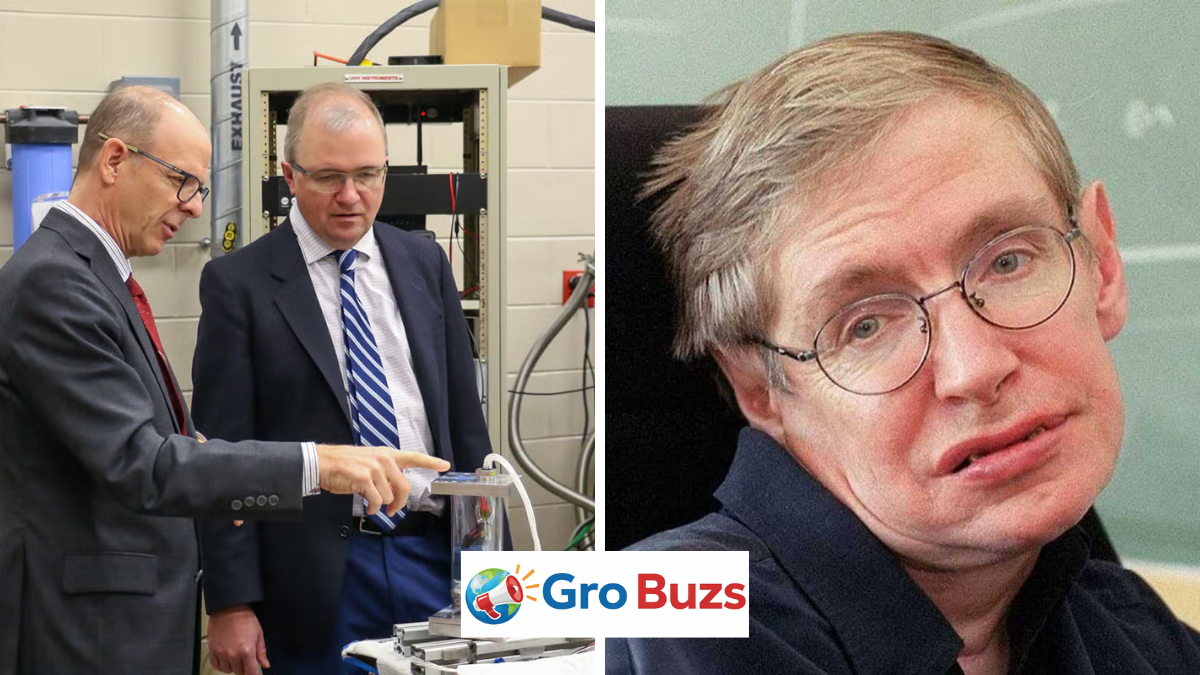
The name Robert Hawking often appears in conversations about the remarkable family of one of the world’s most celebrated scientists. While many people immediately think of his father, theoretical physicist Stephen Hawking, Robert’s own journey reflects a compelling blend of technical expertise, personal resilience, and quiet achievement. His story is less about public fame and more about thoughtful contributions in technology and family life.
Understanding Robert Hawking means looking beyond the shadow of a legendary surname. His life illustrates how individuals connected to global icons can forge their own identities while carrying forward the intellectual curiosity and determination that defined their upbringing. Through his work in software engineering, his commitment to privacy, and his grounded approach to life, Robert represents a fascinating intersection of science heritage and modern technology culture.
Early Life and Family Background
Robert Hawking was born into a family where intellectual exploration and curiosity were everyday realities. Growing up in an environment shaped by groundbreaking theoretical physics meant that conversations about science, mathematics, and the universe were common at home.
Despite the extraordinary reputation of his father, Robert Hawking experienced a childhood that emphasized normalcy. His parents encouraged independence and practical learning, ensuring that he and his siblings developed their own passions rather than feeling pressured to follow a predetermined academic path.
Growing Up in an Extraordinary Household
Living with a globally recognized scientist inevitably influenced Robert Hawking’s perspective on knowledge and ambition. Observing his father’s dedication to research and teaching offered an early example of discipline and perseverance.
However, the Hawking household was also known for humor, curiosity, and warmth. These qualities helped Robert Hawking maintain a balanced view of success, focusing on meaningful work rather than public recognition.
Education and Intellectual Development
Education played a crucial role in shaping Robert Hawking’s professional direction. From an early age, he demonstrated strong analytical thinking skills, particularly in mathematics and computing.
Rather than entering theoretical physics, Robert Hawking gravitated toward technology and engineering. This path allowed him to apply logical problem-solving in practical environments, aligning well with the rapidly expanding world of software development.
Entering the Technology Industry
As the digital revolution accelerated during the late twentieth century, Robert Hawking chose a career in software engineering. The field offered opportunities to build real systems that affect everyday life.
Robert Hawking’s technical mindset and structured thinking made software development a natural fit. Working in technology also allowed him to contribute to innovation while maintaining a relatively private professional profile.
Professional Career in Software Engineering
Over the years, Robert Hawking established himself as a capable and respected software engineer. His work has involved designing systems, improving technical infrastructure, and contributing to modern computing environments.
Unlike public figures in academia or media, Robert Hawking built his career through consistent professional contributions. Colleagues have often described him as thoughtful, analytical, and focused on solving complex technical challenges.
Work at Major Technology Companies
One of the notable aspects of Robert Hawking’s career has been his involvement with leading technology organizations. Working within large tech environments requires collaboration, adaptability, and deep technical knowledge.
Robert Hawking’s experience in such settings highlights his ability to translate theoretical understanding into practical applications. This professional path demonstrates how scientific upbringing can evolve into engineering leadership in modern industry.
Entrepreneurship and Innovation
In addition to corporate roles, Robert Hawking has shown interest in entrepreneurial thinking. Technology professionals often explore new ventures, startups, or innovative projects outside traditional corporate structures.
While maintaining a low public profile, Robert Hawking’s technical background positions him well to contribute to emerging digital solutions. The entrepreneurial mindset aligns with the broader Hawking family tradition of curiosity and exploration.
Relationship with Stephen Hawking
The relationship between Robert Hawking and his father has often been described as supportive and deeply respectful. Growing up with a parent managing a serious physical condition while leading groundbreaking scientific research shaped Robert’s outlook on resilience.
Robert Hawking witnessed firsthand how determination and intellectual curiosity could overcome immense obstacles. These experiences likely influenced his own disciplined approach to work and life.
A Private Life in a Public Family
Unlike many individuals connected to famous families, Robert Hawking has intentionally maintained a relatively private life. He rarely seeks media attention and prefers to keep personal matters away from public discussion.
This approach reflects a deliberate effort by Robert Hawking to separate professional achievements from the global fame associated with his father’s scientific legacy.
Media Interest and Public Curiosity
Public interest in Robert Hawking largely stems from curiosity about the Hawking family. Biographies, documentaries, and interviews about Stephen Hawking often mention his children.
Yet Robert Hawking remains one of the more private members of the family. His preference for privacy contrasts sharply with the public fascination surrounding the Hawking name.
Advocacy and Personal Values
Although Robert Hawking is not widely known for public activism, his family history connects strongly with advocacy for scientific education and disability awareness.
Growing up alongside a father who challenged perceptions of physical limitations likely shaped Robert Hawking’s appreciation for inclusion, accessibility, and perseverance.
Technology Philosophy and Problem-Solving
Engineers often develop a distinctive way of thinking about challenges. Robert Hawking approaches problems with structured analysis, breaking complex systems into manageable components.
This mindset reflects the intellectual environment in which Robert Hawking grew up. Scientific reasoning and curiosity formed the foundation for the logical frameworks used throughout his engineering career.
Professional Skills and Technical Expertise
Modern software engineering requires a wide range of skills, from coding and architecture design to collaboration and system optimization. Robert Hawking has developed these abilities through years of experience in technology environments.
His work demonstrates how analytical thinking and adaptability remain essential traits in the evolving world of computing.
| Skill Area | Description | Relevance to Robert Hawking’s Career |
| Software Development | Designing and building digital systems | Core technical expertise |
| System Architecture | Structuring large technical platforms | Supports scalable technology |
| Analytical Problem Solving | Breaking down complex challenges | Reflects scientific upbringing |
| Collaboration | Working with multidisciplinary teams | Essential in large tech companies |
| Innovation Thinking | Exploring new technical approaches | Aligns with engineering culture |
Misconceptions About Famous Scientific Families
People often assume that children of famous scientists will automatically pursue identical careers. In reality, each family member follows their own interests and talents.
Robert Hawking demonstrates this clearly. Rather than theoretical physics, he chose software engineering, proving that intellectual curiosity can lead to diverse professional paths.
Lessons from the Hawking Family Environment
Growing up in an intellectually rich household provided Robert Hawking with unique perspectives on learning and curiosity. Exposure to academic discussion and scientific inquiry helped shape critical thinking.
Yet the Hawking family also valued creativity, humor, and independence. These influences allowed Robert Hawking to develop confidence in pursuing his own ambitions.
Leadership Through Quiet Expertise
Leadership does not always appear in public speeches or media interviews. In technical fields, leadership often emerges through mentorship, collaboration, and thoughtful decision-making.
Robert Hawking’s career reflects this quieter form of influence. By contributing knowledge and experience within engineering teams, he demonstrates the impact of steady expertise.
Influence of Science on Personal Perspective
Even though Robert Hawking did not become a theoretical physicist, scientific thinking clearly shaped his worldview. Logical reasoning, curiosity, and skepticism remain valuable traits in both science and engineering.
These qualities allow Robert Hawking to approach technological challenges with clarity and precision, reflecting the intellectual legacy of his upbringing.
Future Outlook and Continuing Influence
Technology continues to evolve rapidly, and experienced engineers play an important role in guiding innovation. Professionals like Robert Hawking contribute to the digital infrastructure that supports modern life.
Although he remains outside the spotlight, Robert Hawking’s work represents the practical side of scientific heritage—transforming analytical thinking into real-world systems and solutions.
Cultural Curiosity Around the Hawking Family
Interest in the Hawking family continues decades after Stephen Hawking’s most famous discoveries. Books, documentaries, and films often explore the human side of the family behind the scientific achievements.
Robert Hawking is part of that story, representing the blend of normal family life and extraordinary intellectual legacy that fascinates audiences worldwide.
A Perspective Captured in Words
Many insights about perseverance and curiosity within the Hawking family can be summarized in a well-known sentiment attributed to Stephen Hawking:
“Intelligence is the ability to adapt to change.”
For Robert Hawking, this idea resonates strongly. His transition into technology and engineering reflects exactly that kind of adaptive thinking.
Conclusion
The story of Robert Hawking illustrates how individuals connected to legendary figures can develop their own meaningful paths. Rather than stepping directly into the world of theoretical physics, he chose technology and engineering, fields that align with modern innovation and practical problem-solving.
Through dedication to software development, a commitment to privacy, and a thoughtful approach to life, Robert Hawking demonstrates that legacy is not only inherited but also shaped through personal choices. His journey reminds us that intellectual curiosity can manifest in many forms, and that quiet professional contributions can have lasting impact.
FAQ
Who is Robert Hawking?
Robert Hawking is the eldest son of renowned physicist Stephen Hawking. He built his own career in software engineering and technology while maintaining a largely private personal life.
What does Robert Hawking do for a living?
Robert Hawking works in the technology industry as a software engineer. His professional focus involves designing and developing digital systems and technical infrastructure.
Is Robert Hawking a scientist like his father?
Although he grew up in a scientific household, Robert Hawking chose software engineering rather than theoretical physics as his career path.
Why is Robert Hawking less visible in the media?
Robert Hawking prefers to keep his personal and professional life private. Unlike many public figures connected to famous families, he avoids media attention.
How did Stephen Hawking influence Robert Hawking?
Growing up with a world-famous physicist shaped Robert Hawking’s perspective on resilience, curiosity, and intellectual exploration, even though he pursued a different professional field.