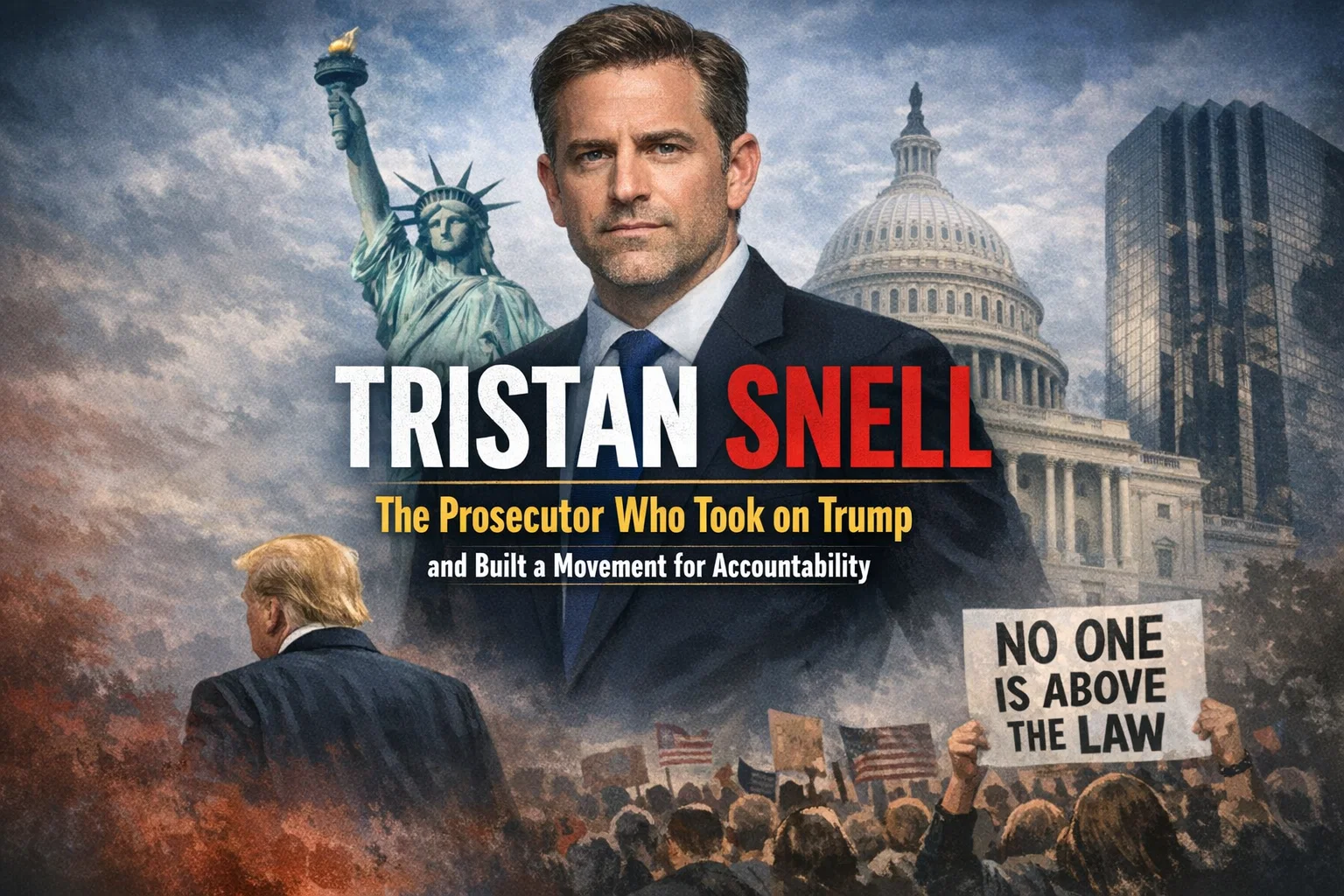
In the complex arena where high-stakes law, public policy, and media narrative collide, few figures have carved out a space as distinct and influential as Tristan Snell. To the public, he is often recognized as the tenacious prosecutor who successfully took on Trump University, securing a $25 million settlement for defrauded students. To legal insiders and political observers, he represents a formidable blend of litigation strategy, communication savvy, and a deeply held philosophy on accountability. Tristan Snell’s career trajectory—from a dedicated public servant at the New York Attorney General’s office to a founding partner of a strategic firm and a ubiquitous media commentator—offers a masterclass in how legal expertise can shape broader cultural and political conversations. This article delves beyond the headlines to explore the principles, strategies, and lasting impact of a lawyer who has become a symbol of holding powerful entities to account.
The Formative Years and Legal Foundation
Tristan Snell’s professional identity is deeply rooted in the public sector ethos of the New York State Attorney General’s office. He joined this renowned proving ground under Attorney General Andrew Cuomo, immersing himself in the intricate work of the Consumer Frauds Bureau. This environment, focused on protecting everyday citizens from deceptive business practices, sharpened his skills in investigating complex frauds and navigating the daunting legal firepower of corporate defense teams. It was here that Snell internalized a core tenet that would define his career: that rigorous, evidence-based litigation could be a powerful tool for justice and market fairness, even against the most well-resourced opponents.
His early work involved a range of consumer protection cases, from predatory lending schemes to false advertising. This foundational experience taught him more than just statute law; it instilled a strategic understanding of how to build a public-facing case. He learned the importance of crafting a compelling narrative that resonated not only with a judge or jury but also with the court of public opinion. This dual-track approach—airtight legal argumentation paired with clear public communication—became a hallmark of his methodology. The stage was set for Tristan Snell to step into a case that would become a national spectacle and define his public legacy.
The Trump University Case: A Landmark Victory
The investigation into Trump University presented a unique and formidable challenge. The entity, owned by a future President of the United States, was accused of defrauding thousands of students with promises of exclusive real estate secrets from Donald Trump himself. Tristan Snell was appointed lead prosecutor for the New York State Attorney General’s office, tasked with building a case against a figure known for his litigiousness and mastery of media. The pressure was immense, but Snell and his team pursued a meticulous, document-driven strategy, amassing evidence from internal emails, former employees, and victim testimonies that painted a damning picture of a deliberate scam.
The result was a resounding legal and moral victory. In 2016, then-President-elect Trump agreed to a $25 million settlement to resolve the lawsuits, without admitting liability. For the over 6,000 victims, it was long-awaited restitution. For the legal community, it was proof that no individual is beyond the reach of a properly executed consumer protection action. The success of the Trump University case cemented Tristan Snell’s reputation as a prosecutor who could not only withstand intense scrutiny and pressure but could also prevail. It demonstrated a critical principle: that persistent, principled legal work could achieve accountability at the highest levels.
Founding Main Street Law and a New Model
After his tenure in public service, Tristan Snell co-founded Main Street Law, a firm that represents a natural evolution of his expertise. The firm’s mission extends beyond traditional client representation; it operates at the intersection of law, media, and public advocacy. Main Street Law advises corporations, executives, and individuals on navigating high-profile legal and reputational challenges, particularly those that attract media attention or have political dimensions. This venture leverages Snell’s unique experience from both sides of the courtroom and the press briefing room.
The philosophy behind Main Street Law reflects Snell’s holistic view of modern legal conflicts. In today’s environment, a courtroom victory can be undermined by a reputational disaster, and vice versa. The firm’s approach is integrated, considering litigation strategy, regulatory compliance, crisis communications, and public narrative as interconnected components of a single defense or advocacy campaign. This model positions Tristan Snell not just as a litigator, but as a strategic counselor for the era of 24/7 news cycles and social media amplification, where legal battles are often fought on multiple fronts simultaneously.
The Philosophy of Strategic Accountability
At the core of Tristan Snell’s work is a coherent philosophy of accountability. He argues that the rule of law is undermined not just by illegal acts, but by the consistent avoidance of consequences for powerful bad actors. This belief drives his advocacy for robust enforcement of existing laws, particularly in the realms of consumer protection, financial regulation, and white-collar crime. For Snell, the law is a dynamic tool for maintaining market integrity and public trust, and its diligent application is a civic necessity.
This philosophy is pragmatic, not merely ideological. Snell consistently emphasizes strategy and preparedness. He points out that holding powerful figures accountable requires immense preparation, resourcefulness, and the strategic patience to follow evidence where it leads. It’s about understanding an opponent’s likely tactics, anticipating legal maneuvers, and building a case so compelling that settlement or defeat becomes the most rational option. This focus on the how—the mechanics of achieving accountability—distinguishes his perspective and provides a practical roadmap for other prosecutors and advocates.
Media Presence and Public Education
Following the Trump University case, Tristan Snell emerged as a sought-after legal analyst across major networks like CNN and MSNBC. His commentary is characterized by a prosecutor’s precision, breaking down complex legal proceedings into digestible insights for a general audience. He does not merely report on events; he provides context, explains procedural nuances, and forecasts potential legal strategies. This role has made him a key translator between the often-opaque world of high-stakes litigation and the public’s understanding.
His media work is a direct extension of his belief in transparency and public engagement with the legal system. By demystifying processes and explaining the stakes, Snell contributes to a more informed citizenry. He uses his platform to highlight the importance of legal institutions and the real-world impact of judicial decisions. Whether discussing a Supreme Court ruling or a state-level fraud case, his analysis reinforces the idea that the law is not an abstract concept but a living framework that shapes everyday life, a perspective undoubtedly informed by the high-profile work of Tristan Snell.
Authoring “Taking Down Trump”
In 2024, Tristan Snell solidified his status as a leading voice on legal strategy and accountability with the publication of his book, Taking Down Trump: 12 Rules for Prosecuting a President (and His Allies). The book is both a memoir of his seminal case and a strategic guidebook. It distills the lessons learned from the Trump University litigation into a set of actionable principles for prosecutors facing similarly daunting, politically charged targets. The “rules” range from logistical advice on building a team to psychological insights on dealing with a disruptive opponent.
The book’s significance lies in its systematic breakdown of a successful approach. It moves the conversation from anecdote to methodology. By framing his experience as a set of transferable rules, Snell offers a valuable resource for legal professionals while also providing the public with a behind-the-scenes look at what it truly takes to pursue justice against a formidable adversary. Taking Down Trump serves as a capstone to Snell’s journey with that specific case while projecting his insights forward to inform future battles for accountability, establishing Tristan Snell as a thoughtful strategist beyond his individual victories.
Broader Impact on Corporate Enforcement
The influence of Tristan Snell’s work and philosophy extends into the broader landscape of corporate enforcement and white-collar crime. His successful prosecution demonstrated that aggressive, well-prepared state attorneys general can achieve significant victories where federal regulators may hesitate or move slowly. This has arguably empowered other state-level officials to pursue their own ambitious investigations into corporate malfeasance, knowing a blueprint for success exists.
Furthermore, his public advocacy emphasizes deterrence. The argument is straightforward: when corporations and their leaders believe they will face costly, reputation-damaging litigation with a high chance of loss, they are more likely to comply with the law in the first place. This creates a more ethical marketplace. Snell’s career, from his days at the NY AG to his current commentary, consistently makes the case that vigorous enforcement is not anti-business; it is pro-fairness and essential for a capitalism that benefits the many, not just the powerful few.
Common Misconceptions and Clarifications
A common misconception is that Tristan Snell’s work is primarily politically motivated. While his most famous case involved a political figure, a closer look at his career reveals a consistent thread focused on legal principle and consumer protection, irrespective of party. His early cases targeted corporate entities with no political identity. His philosophy is rooted in the equal application of the law, a concept that, by its nature, must apply to the powerful as rigorously as to the powerless.
Another misunderstanding is viewing him solely through the lens of a “Trump antagonist.” This reduces a multifaceted legal career to a single dimension. While that case is pivotal, Tristan Snell is better understood as a specialist in a specific genre of high-pressure, high-profile accountability litigation. His expertise, now channeled through Main Street Law and his media analysis, is applicable to a wide range of scenarios involving wealthy individuals, large corporations, and complex frauds—areas that exist independently of the political arena.
The Evolving Legal Landscape and Snell’s Role
The legal and regulatory environment in the United States is in a state of flux, with debates raging over the scope of regulatory authority, the independence of law enforcement, and the very nature of accountability for public figures. In this landscape, voices like Tristan Snell’s carry significant weight. He operates as a bridge between the traditional legal establishment and a public increasingly demanding transparency and consequences. His analyses often highlight the practical implications of legal trends for everyday citizens.
Looking ahead, Snell’s role is likely to evolve further. Whether through continued high-profile litigation at his firm, deeper forays into writing and analysis, or advisory roles, his focus on strategic accountability will remain relevant. As new forms of corporate and digital fraud emerge, and as the lines between personal, corporate, and political conduct continue to blur, the need for clear-eyed, strategic legal thinking of the kind exemplified by Tristan Snell will only grow more critical.
Comparative Analysis: Snell’s Approach vs. Traditional Prosecution
The following table outlines the key distinctions between the integrated, strategic model championed by Tristan Snell and a more traditional, siloed prosecutorial approach.
| Feature | Traditional Prosecution Model | Tristan Snell’s Strategic Model |
| Primary Focus | Courtroom victory based strictly on legal merits. | Integrated victory encompassing legal, reputational, and narrative outcomes. |
| Communication Strategy | Often reactive; limited press engagement, typically through formal statements. | Proactive and integral; public narrative is seen as a core component of case strategy from the outset. |
| Case Preparation | Centered on evidence collection for legal arguments. | Evidence collection paired with understanding opponent’s public persona, media tactics, and political capital. |
| View of the Opponent | An adversarial party in a legal dispute. | A multifaceted entity operating in legal, media, and public opinion arenas simultaneously. |
| End Goal | A favorable judgment, settlement, or plea deal. | Accountability achieved through a combination of legal result, public recognition of wrongdoing, and deterrent effect. |
| Applicability | Well-suited for standard criminal and civil matters. | Essential for high-profile, politically sensitive, or media-dominant cases involving powerful entities. |
A Lasting Legacy and Influence
The legacy of Tristan Snell is still being written, but its contours are clear. He has demonstrated that determined legal advocacy, grounded in meticulous preparation and strategic public communication, can level the playing field. For aspiring lawyers and prosecutors, his career offers a powerful alternative model—one that embraces the public dimension of high-stakes law without sacrificing legal rigor. He has contributed to a growing toolkit for those seeking to enforce accountability in an increasingly complex world.
Ultimately, the work of Tristan Snell reinforces a foundational democratic idea: that the law must have a practical mechanism for addressing power imbalances. Whether through direct litigation, strategic counseling, or public education, his efforts continue to underscore that legal strategy, when executed with skill and integrity, remains one of the most potent forces for ensuring that credibility and consequences still matter.
“The goal isn’t just to win a case in a courtroom. The goal is to establish a precedent—legal and cultural—that certain conduct will be met with serious, inescapable consequences. That’s how you create real deterrence and real change.” — Tristan Snell
Conclusion
Tristan Snell’s journey from a prosecutor in the New York Attorney General’s office to a defining voice on legal accountability encapsulates a modern approach to justice. His landmark victory in the Trump University case was not an endpoint, but a launching pad for a broader mission to refine and advocate for the strategies that make accountability possible. Through Main Street Law, his media analysis, and his writing, he continues to shape the conversation around how society investigates, prosecutes, and ultimately deters misconduct by the powerful. In an era of intense scrutiny over our institutions, the methodical, principled, and strategic framework championed by Tristan Snell provides a vital reference point for upholding the rule of law.
Frequently Asked Questions
What is Tristan Snell best known for?
Tristan Snell is best known as the lead New York state prosecutor who successfully pursued the civil case against Trump University, resulting in a $25 million settlement for defrauded students in 2016. This high-profile victory established his reputation for holding powerful figures accountable through diligent legal strategy.
What does Tristan Snell’s firm, Main Street Law, do?
Main Street Law, co-founded by Tristan Snell, operates at the nexus of law, media, and crisis management. The firm advises clients—including corporations and executives—facing high-profile legal and reputational challenges, applying an integrated strategy that considers litigation, public narrative, and regulatory compliance as interconnected pieces.
How has Tristan Snell contributed to legal commentary?
Following his work on the Trump University case, Tristan Snell became a frequent legal analyst on major news networks. He is respected for his ability to clearly explain complex legal proceedings, strategic nuances, and the practical implications of court decisions for a general audience, thus serving as an educator on the legal system.
What is the core argument of Tristan Snell’s book, “Taking Down Trump”?
In Taking Down Trump, Tristan Snell distills the lessons from his most famous case into 12 strategic rules for prosecuting powerful, disruptive figures. The book argues that success requires meticulous preparation, resource management, psychological understanding of the opponent, and an integrated approach that combines legal and communication strategies.
Why is the work of Tristan Snell considered significant beyond a single case?
The significance of Tristan Snell’s work extends beyond one victory because it provides a replicable blueprint for accountability. He has championed a philosophy and methodology that empowers other prosecutors and advocates to pursue complex cases against well-resourced opponents, thereby strengthening the deterrent effect of consumer protection and fraud laws.